
Data on primary and fuel items would continue to be released on weekly basis.

Reserve Bank of India (RBI) on Wednesday upped inflation projection for the current fiscal to 6.7 per cent from 5.7 per cent forecast in April. RBI Governor Shaktikanta Das said the upside risk to inflation persists and the recent spike in tomato prices would fuel food inflation. Also, high global crude oil prices would add to the upside pressure on inflation. The upward revision in inflation projection comes as domestic retail inflation has remained above RBI's comfort level of 6 per cent for four months in a row, mainly due to the Russia-Ukraine war which has impacted the prices of commodities across the globe.

The Indian economy is likely to post better than anticipated growth in the second quarter (July-September) owing to robust urban consumption and expansion in services, a Business Standard analysis of high-frequency indicators showed. While gross domestic product growth in the September quarter is expected to come below the 7.8 per cent print in the June quarter due to a favourable base fading, analysts say the print will be much closer to 7 per cent than the 6.5 per cent anticipated earlier. While the Reserve Bank of India (RBI) had estimated 6.5 per cent growth for July-September, last month Governor Shaktikanta Das said the growth figure would surprise on the upside.

Fruits and vegetables, pulses, eggs meat and fish got expensive during the period, while some manufactured food articles like atta, maida got cheaper. Among other manufactured items, prices of cement, lead ingot and some basic heavy inorganic chemicals got dearer.

The government has exhausted only 39 per cent of its fiscal deficit target in the first half of FY24.

The wholesale price-based inflation rose to 2.03 per cent in January, 2021, even as food prices cooled. The WPI inflation was 1.22 per cent in December, 2020 and 3.52 per cent in January last year. While food articles saw softening in inflation in January, manufactured items witnessed hardening of prices, as per data released by the Commerce and Industry ministry.

Price of potato, a daily consumable vegetable, rose 58.78 per cent during the month

Inflation in onion continued to rule high at 42.22 per cent and in potato at 43.25 per cent.
Inflation remained unchanged at the previous week's level of 5.16 per cent for the week ended October 7

CARE Ratings, in a report, said it foresees an increase in the retail prices of petrol and diesel in the coming few days, depending on how the oil markets react in the reduction in supply from the cartel.
The finance ministry has proposed that services should be included in the widely tracked wholesale price-based inflation index to reflect true picture of price changes in the economy.
While onion prices in the wholesale markets of Mumbai declined 48.6 per cent, the steepest among the four metros, compared to October, prices fell only 27.3 per cent in Mumbai's retail markets.
Wholesale prices-based inflation rate rose to a ten-month high of 5.02 per cent for the week ended February 23, as food and some manufactured products turned costly. Inflation rate for the previous week was at 4.89 per cent and was last above five per cent on May 19, 2007 (5.06 per cent).

The wholesale price-based inflation rose to a four-month high of 14.55 per cent in March, mainly due to hardening of crude oil and commodity prices, even though vegetables witnessed easing of price pressures. As per the government data released on Monday, WPI inflation has remained in double digits for the 12th consecutive month beginning April 2021. The last time such a level of WPI was recorded was in November 2021, when inflation was 14.87 per cent.

Analysts remain selective on cement stocks amid the likely government's capex push ahead of the scheduled general elections in May 2024. While UBS has initiated coverage on the Indian cement sector with an anti-consensus negative view and suggests investors sell select cement stocks on a rally, those at Nomura remain selectively bullish on the sector and prefer companies with large brownfield optionality and multi-region presence. In the near-term, UBS expects strong earnings of cement companies in the next two quarters to be driven by robust demand and margin tailwinds, but suggests any sharp uptick in stock prices could offer a good opportunity for booking profits in the related counters.

In the national capital, onion prices were ruling at around Rs 40 per kilogram.
Inflation fails marginally to 4.52 per cent for the week ended July 15 from the 4.68 per cent in the previous week, despite increase in prices of vegetables, some edible oils and metals.

In a bid to further cool down edible oil prices and curb hoarding, the Centre on Friday extended stock limits on edible oils and oilseeds till June 30. Besides, the government has specified the stock limits that have to be imposed by states that have not implemented the earlier order on the limits. In October 2021, the ministry of consumer affairs had imposed stock limits till March 2022 and left the decision to states to decide on the stock limits based on available stock and consumption pattern.

There was acceleration in prices of fuel and power (11.69 per cent) and manufactured products (2.55 per cent).

Onion prices have increased 150% over the last few months
The wholesale price-based inflation surged to more than a decade high of 14.23 per cent in November, mainly due to hardening of prices of mineral oils, basic metals, crude petroleum and natural gas. WPI inflation has remained in double digits for eight consecutive months beginning April. Inflation in October this year was at 12.54 per cent, while in November 2020 it was at 2.29 per cent. "The high rate of inflation in November 2021, is primarily due to rise in prices of mineral oils, basic metals, crude petroleum & natural gas, chemicals and chemical products, food products etc as compared to the corresponding month of the previous year," the commerce and industry ministry said in a statement on Tuesday.
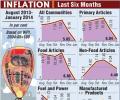
This is the second straight month of decline in wholesale price based inflation.
Inflation rose to 5.32 per cent for the week ended December 9, from 5.16 per cent in the previous week mainly due to increase in prices of some food articles including vegetables.
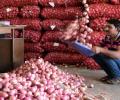
Vegetable inflation softened to 24.76 per cent in June, down from 33.15 per cent in the previous month. Inflation in potato was (-) 24.27 per cent, against (-) 23.36 per cent in May.
Inflation crossed five per cent mark to touch 5.16 per cent for the week ended September 30 from 4.77 per cent in the previous week mainly due to increase in the prices of energy, food and manufactured items.
The wholesale price-based inflation accelerated to a record high of 12.94 per cent in May, on rising prices of crude oil and manufactured goods. Low base effect also contributed to the spike in WPI inflation in May 2021. In May 2020, WPI inflation was at (-) 3.37 per cent. This is the fifth straight month of uptick seen in the wholesale price index (WPI)-based inflation. In April, 2021, WPI inflation hit double digit at 10.49 per cent. "The annual rate of inflation, based on monthly WPI, was 12.94 per cent for the month of May, 2021 (over May, 2020) as compared to (-) 3.37 per cent in May 2020.
Inflation declined marginally to 4.91 per cent for the week ended August 19 from 4.92 per cent in the previous week despite increase in prices of minerals, food and manufactured items.
Inflation declined marginally to 4.61 per cent for the week ended July 29, from 4.67 per cent in the previous week mainly due to cheaper food items, including milk.
Inflation fell to 4.06 per cent for the week ended March 18 as against 4.28 per cent in the preceding week, mainly due to cheaper food articles including vegetables and non-food items.

Benchmark BSE Sensex rose by over 379 points on Tuesday as gains in oil & gas, banking and auto shares helped the barometer continue winning run for the third straight session. The 30-share BSE benchmark index advanced 379.43 points or 0.64 per cent to settle at 59,842.21. During the day, it jumped 460.25 points or 0.77 per cent to 59,923.03. The broader NSE Nifty climbed 127.10 points or 0.72 per cent to 17,825.25 as 42 of its constituents advanced.

Onions had the highest inflation rate among all major commodities.
Inflation declined to 5.16 per cent for the week ended December 2 from 5.30 per cent in the previous week mainly due to a fall in the prices of fuel and food items.
The good news on inflation continues as the wholesale price index fell for the tenth week in a row to an almost 11-month low of 5.24 per cent for the week ended January 3, prompting the Finance Ministry to project that it would go down to 3-4 per cent by March 31.

Discussion paper fixes Rs 1,000 cr as minimum capital for these specialised banks
The cooking oil national industry body -- Solvent Extractors' Association (SEA) of India has suggested immediate initiation of government to government (G2G) dialogue with Indonesia on the proposed palm oil export ban from April 28 by them as it would have an adverse repercussions in India. Indonesia, which is the world's largest producer of palm oil and meets nearly 50 per cent of the total palm oil requirement in India annually, had announced to ban exports till further notice apparently to contain edible oil prices in their domestic market. "We have suggested our government initiate dialogue with Indonesian counterparts at the highest diplomatic level on the cooking oil export ban.
Inflation rose to 4.77 per cent for the week ended September 23 from 4.56 per cent in the previous week, mainly due to spurt in prices of pulses, wheat and iron ore.
Inflation further rose to 4.74 per cent for the week ended May 20 from 4.32 per cent in the previous week mainly due to increase in the prices of food, non-food, minerals and some manufactured items.

Retail inflation in March inched up to 8.31 per cent from 8.03 in February, mainly on account of a rise in fruit and vegetable prices.
India's wholesale prices fell to 5.90 per cent in the year to May 10 from 6.03 per cent in the year to May 3, due to lower prices of several manufactured items, the government said on Sunday.\n\n\n\n

M&M was the biggest loser in the Sensex pack, declining nearly 3 per cent, followed by TCS, Bajaj Finance, Wipro, Kotak Bank, Tech Mahindra, HCL Tech and Tata Motors. In contrast, Titan, Bharti Airtel, ICICI Bank and L&T were among the gainers, rising up to 0.93 per cent.
 © 2026 Rediff.com - Advertise with us - Disclaimer - Privacy Policy - Sitemap - Feedback - About us - Terms of use - Grievances